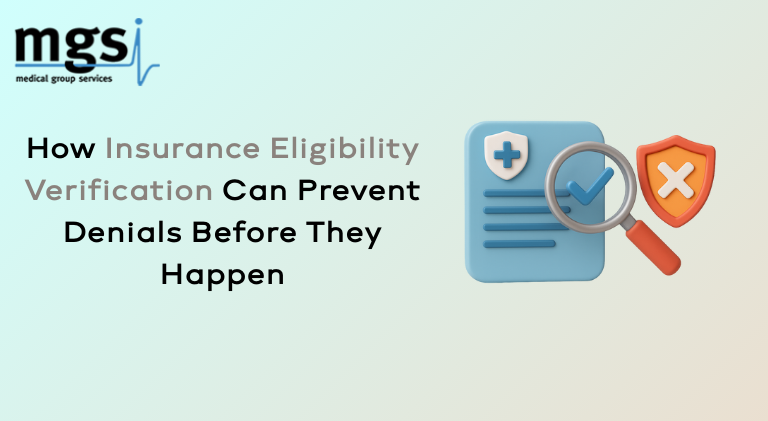
Claim denials are some of the biggest headaches providers must deal with in today’s complicated health care landscape. Denials delay revenues, enhance administrative workload, and frustrate patients. One of the most effective ways to prevent claim denials is insurance eligibility verification: it’s a proactive step in confirming patient coverage before any medical service is provided.
What is Insurance Eligibility Verification?
Insurance eligibility verification is a process used by providers to confirm a patient’s insurance and benefits before treatment. This process helps providers understand:
What services are covered
- Patient co-pay and deductible amounts
- Any limitations or exclusions to coverage
- Verification helps decrease surprises and avoids claiming denials because both the provider and the patient are aware of the financial responsibilities upfront.
Why Claims Get Denied
To understand the true value of eligibility verification, one must first appreciate why denials occur in the first place. Common ones include:
- Incorrect or outdated insurance information
- Lapsed or expired coverage
- Services excluded in the patient’s plan.
- Missing pre-authorizations
- Coding or documentation errors
- Most of these can be avoided by verifying insurance eligibility prior to submitting the claim.
How Eligibility Verification Prevents Denials
Real-Time Coverage Checks
Modern verification tools let providers check the coverage instantaneously. This reduces the risk of providing services that the insurer won’t reimburse.
Accurate Patient Information
Verifying insurance information aids in the correction of errors in demographics, policy numbers, or even plans, which are common reasons for denials.
Pre-authorization Alerts
Some procedures need to be preapproved. Eligibility verification highlights need early, which avoids delays or denials of claims.
Transparency of Patient Costs
The patients are informed about co-pays, deductibles, and out-of-pocket costs. The clear communication reduces delayed payments and claims denials.
Streamlined Revenue Cycle
Fewer denials equate to faster claim processing and improved cash flow. Verification is the first defense in the revenue cycle and in turn makes the billing process more efficient overall.
The Role of Technology
Advanced software solutions can automatically check insurance eligibility by integrating with EHR and practice management systems to reduce human error and free staff time.
Best Practices for Insurance Eligibility Verification
- Verify the coverage before each visit, not just the first one.
- Use automated tools to reduce errors
- Confirmation of pre-authorization for high-cost or specialized procedures
- Maintain correct records for auditing purposes.
- Train the staff to identify common reasons for denial and proactively handle them.
Denials are costly, time-consuming, and frustrating for providers and patients alike. Ensuring insurance eligibility is a simple but powerful step to avoid denials before they happen.